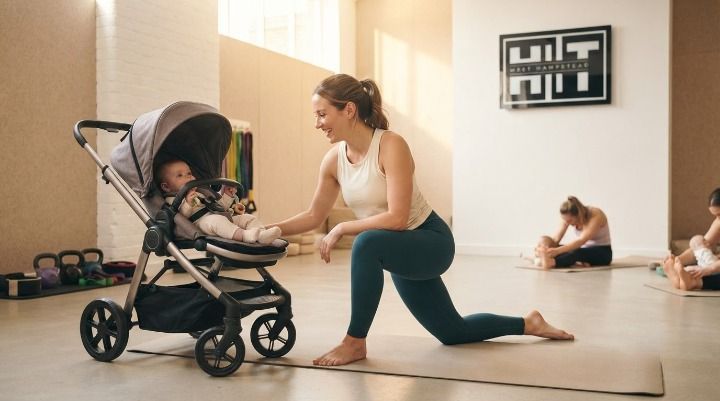
Gym West Hampstead: A Local's Guide to Finding Your Fitness Community
Most people join a gym West Hampstead locals recommend for the workout. Most people who stay are staying for something else.
We've watched this pattern for years now. Someone signs up in January chasing a specific goal — lose weight, get stronger, train for a race — and that goal gets them through the door. But the ones still training in June, in the following January, the ones who've become part of the furniture? Ask them why they keep showing up and the workout is rarely the first thing they mention. They mention Dave, who always takes the spot next to them. They mention the WhatsApp group that started as class banter and turned into a genuine friendship. They mention that walking in on a rough day, someone actually asks how they're doing, and means it.
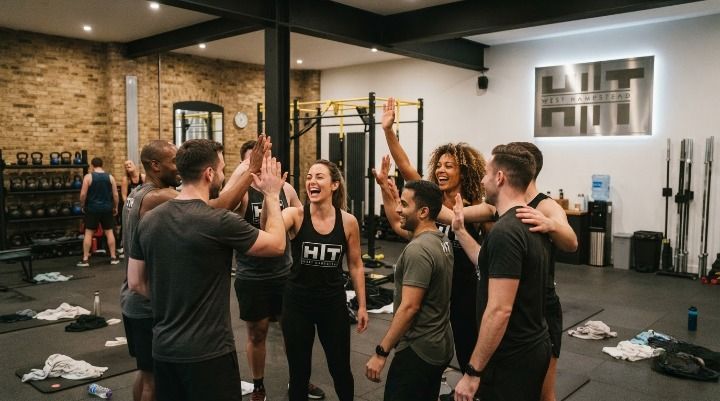
Why community, not just class quality, is what keeps people training
There's decent evidence behind this, not just gut feeling. A widely cited 1995 study on social relationships in health clubs found that people who socialised with others they'd met at the gym — outside the gym, not just during class — exercised more consistently than people who didn't. Having friends at the club predicted whether someone skipped fewer sessions. Training with a friend predicted how satisfying they found the workout itself. None of that is about programming or equipment. It's entirely about who's standing next to you.
The Mental Health Foundation makes a similar point from the wellbeing side: exercising with others doesn't just improve fitness outcomes, it supports mood, motivation and a sense of belonging in ways solo training rarely does. Put simply, a good class gets you moving. A good community gets you moving on the days you really didn't want to.
We built our fitness classes West Hampstead programme around that idea deliberately. Group formats, coaches who know your name by week two, a schedule designed so regulars keep bumping into the same faces. It's not an accident that people end up friends. It's the whole point.
What it actually feels like walking in as a newcomer
Nobody remembers their first day at a new gym fondly. You don't know where to put your bag, you're not sure if you're doing the warm-up right, and you're fairly convinced everyone else already knows each other and is silently judging your trainers.
Here's the honest version of what actually happens: a coach clocks you're new before you've said a word, comes over, tells you where to put your stuff, and gives you a rough idea of what the session involves. You'll probably still feel a bit lost for the first ten minutes. Everyone does. By the cool-down, at least one regular will have said something to you — asked if you're new, told you where the water is, made a joke about how brutal that last set was. It's small stuff. It's also exactly what turns a one-off visitor into someone who books the next session.
How coaches build relationships with regulars over weeks and months
This part is less mysterious than it sounds. Coaches remember things. Not everything, but the things that matter to you: that you mentioned a dodgy knee three weeks ago and they're checking in on it, that you had a race coming up and they ask how it went, that you missed last Tuesday and they notice.
That kind of attention builds trust gradually, the same way it does with anyone you see regularly. It's also why our coaching team stays consistent rather than rotating constantly — you can't build that history with someone new every fortnight.
| What you're comparing | Community-Led Gym (HIIT West Hampstead) | Typical Anonymous Gym |
|---|---|---|
| Coach relationships | Consistent coaches who know your name and history | Rotating staff, limited personal contact |
| Motivation source | Coaches and training partners check in on you | Self-motivated, no one notices if you skip |
| Long-term retention | Higher — friendships keep people coming back | Lower — easy to quietly drop off |
| Social touchpoints | App community, socials, member events | Rarely any structured social element |
| Accountability | Training partners and coaches expect you | Accountability is entirely on you |

Member stories: friendships and accountability partnerships formed in class
Some of the strongest friendships we've watched form here started because two people kept getting paired up for partner exercises and eventually swapped numbers to arrange a coffee. One pair of regulars now train together three times a week outside of class hours specifically because neither wants to be the one who lets the other down.
That's the accountability piece nobody talks about enough. Knowing a coach expects you is one kind of motivation. Knowing a friend is already on their way, and will text if you don't show, is a stronger one for most people.
Social touchpoints beyond the workout
The training itself is only part of it. Our app has a community feed where people post about sessions, races, and the occasional questionable post-workout meal choice. We run socials a few times a year — nothing elaborate, usually just drinks or a shared meal, but it's where the WhatsApp-group friendships turn into actual ones. Some members organise their own things entirely off the back of connections made in class: running groups, Hyrox training pairs, the odd birthday do.
None of this is engineered top-down. It's what happens when you put the same group of people in a room together, working hard, several times a week, for months on end.
From nervous first-timer to regular in a month
If you're weighing up whether to try this out, here's roughly what the first month tends to look like. Week one is disorientating — new faces, new format, your body reminding you it's been a while. By week two, you'll recognise a handful of people even if you haven't spoken to them yet. Week three is usually when someone talks to you unprompted, and you start to feel less like a visitor. By week four, you're the one who notices when a new face turns up nervous, and you're the one who says something.
It's a slow shift, and it happens whether or not you're chasing it. That's the thing about training somewhere built around community rather than just class content: you don't have to try to make friends. You just have to keep showing up.
If you're still comparing options across the area, our earlier piece on how to find the right gym fit in NW6 walks through the practical side — locations, facilities, class styles. This one's about the bit that's harder to put on a website: what it actually feels like once you're through the door.
Come Try the Community for Yourself
The best way to know if a gym feels right is to walk in and see who's there. Start with our two-week kickstart and find out.
Start Your Kickstart