Functional Fitness Workouts: How to Build Real-World Strength

Tassadaq Hussain • March 11, 2026

Introduction: Why Functional Fitness Matters

Functional fitness allows you to gain strength through everyday movements. When you use functional fitness exercises, it helps you operate effectively in your life (lifting groceries, walking up stairs, bending down, etc.) and gives you increased mobility and strength to deal with your daily environment. Functional fitness helps build strength; therefore, it allows for the accomplishment of daily activities more easily. Whether you're lifting groceries or walking upstairs, functional fitness will reduce injuries by improving the way your body functions.


What Is Functional Fitness? (Focus Keyword: Functional Fitness Workouts)

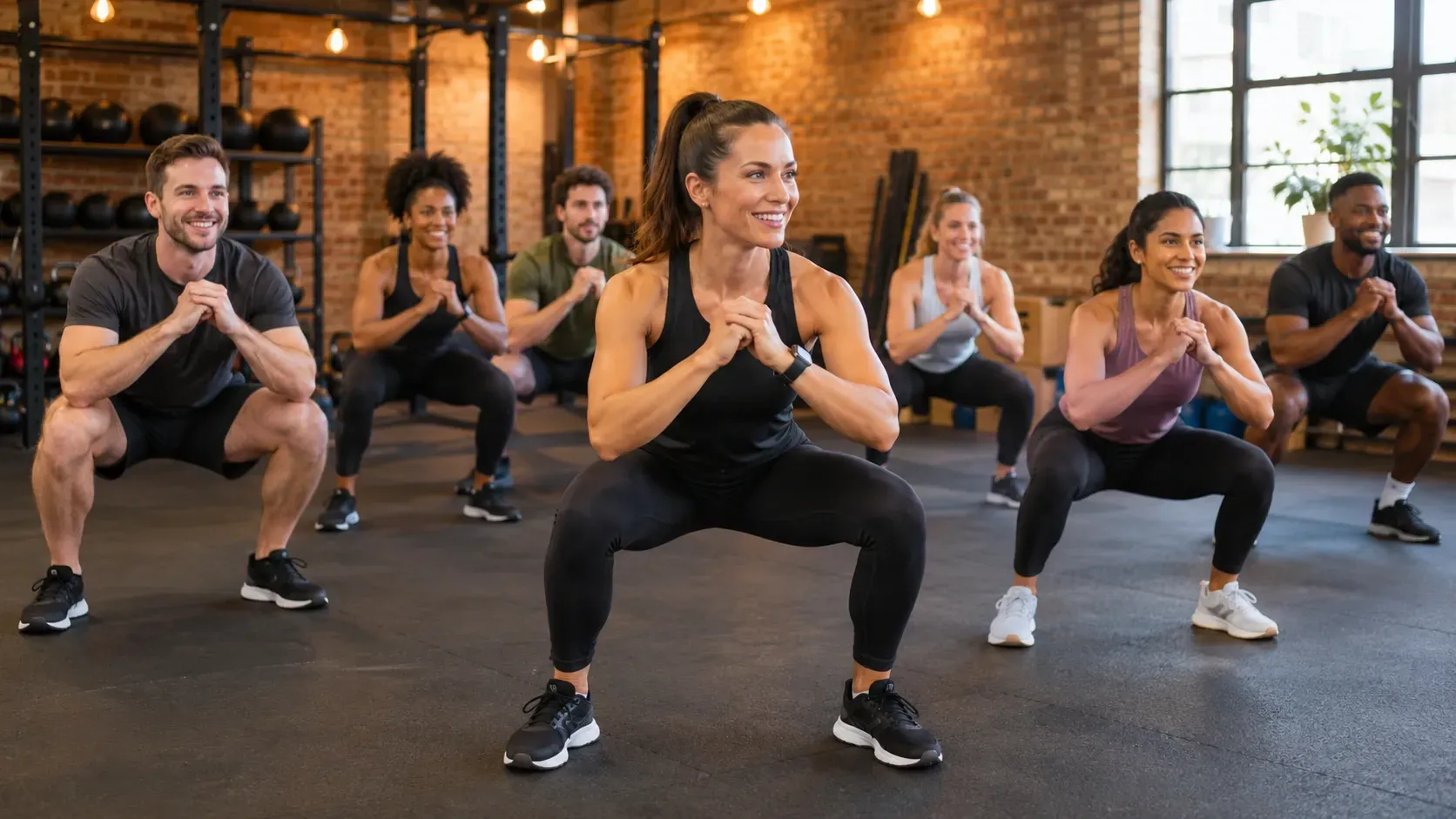
Functional fitness refers to fitness training that utilises movement patterns that closely match how we actually move in everyday activities. Instead of isolating each muscle group for targeted workouts, as most traditional types of exercise do, functional fitness incorporates the use of all major muscle groups and joints simultaneously during workouts. All full-body weight training movements, such as squats, lunges and pushes, are similar movements to what we perform throughout most of our daily lives and provide the best way to develop strength, balance, coordination and mobility so that your body moves and feels as strong in everyday life outside of the gym. At HIIT West Hampstead, functional fitness is a vital part of every workout philosophy. Each functional fitness workout is intertwined with fast-paced high-intensity interval training (HIIT) to develop strength that is just as important for everyday living as it is for athletic performance.

The Benefits of Functional Fitness Workouts (Secondary Keyword: Real-World Strength)

Functional fitness uses a variety of resistance training approaches to train the whole body through movements that promote functional fitness, these types of workouts are:

1. Practical and Transferable: By training the functional movements we perform every day, we gain strength that we can use in our everyday lives (as opposed to simply training with machines in the gym).

2. Comprehensive: Functional fitness workouts not only train the individual muscle groups, but they also develop the overall coordination, stability and balance of all the muscles in the body.

3. Efficient:  Functional fitness workouts can burn more calories and create greater strength gains in less time than traditional isolation exercises because you train multiple muscle groups at one time.

4. Reduce Injury Risk:  By improving the mechanics of movement and providing greater stability, functional fitness workouts help keep the body safe during the day-to-day lifting, carrying and bending activities that occur in everyday life.

These workouts not only help you develop muscle but also help you develop the ability to live an unrestricted lifestyle through functional fitness.

How HIIT West Hampstead Integrates Functional Training

HIIT West Hampstead is located in the heart of London, promoting functional fitness through structured and dynamic group workouts. All level classes allow for a variety of different fitness levels, and all movements in the class will help with day-to-day activities as well as achieve visible results.

HIIT West Hampstead offers functional training by focusing on:

High-intensity interval training (HIIT):  Using short, high-intensity bursts of physical activity followed by recovery periods allows you to train efficiently and effectively to develop both strength and cardiovascular capacity.

Functional movements are varied:  LIfting/squatting/pushing-pulling/twisting and jumping with various equipment that may be less common in most gyms.

Coaching:  The instructors are qualified and experienced to help you understand the correct form while keeping you motivated to get stronger safely by adapting exercises to your individual capabilities.

Community:  Working out in a group of supportive people keeps you accountable to yourself and inspires you to do your best. Whether you are an absolute beginner or a seasoned athlete, the workouts are tailored for you to develop strength that IS life-based and not just in the gym.

Conclusion: Strength You Can Use Every Day

Functional fitness workouts allow one to build on the strengths and abilities of their body in order to help them to be more capable of accomplishing their daily tasks, whether it's lifting groceries or running to catch the bus. They focus on how well our bodies are able to move and feel as we go through our daily lives. When you train at HIIT West Hampstead, you will experience this type of workout in a supportive, inspiring setting which is located in the UK. It will encourage you to push beyond what you think is physically possible while at the same time giving you the confidence to perform all types of daily tasks with ease.

If you’re ready to move better, feel stronger and train with purpose, functional fitness could be the game-changer you’ve been looking for — and HIIT West Hampstead is the perfect place to start. 
By HIIT Gym April 28, 2026
The first time I walked past a CrossFit gym —or a "box", as they call it—I heard grunting, weights crashing, and someone counting down reps like their life depended on it. I kept walking. Maybe you've had that same moment. You peeked through the window, thought, "That's absolutely not for me," and went home to your couch. No judgement. I did the same thing. But here's what I eventually figured out: CrossFit isn't the cult of sweaty maniacs it looks like from the outside. It's actually one of the most beginner-friendly fitness programmes out there…if you go in knowing what to expect. So let me break it down for you, honestly So... What Actually Is CrossFit? At its simplest, CrossFit is a workout programme built around three ideas: Functional movements — things your body is actually designed to do (squat, lift, push, pull, carry) High intensity — you work hard, but it's relative to your fitness level. Constant variety — every single day is a different workout It was founded in 2000 by Greg Glassman, a former gymnast who got frustrated that traditional gym routines—curls, leg press, and chest day—weren't making people actually fit. He wanted workouts that translated to real life. The first gym opened in Santa Cruz, California, and things kind of snowballed from there. There are now over 12,000 affiliated gyms across the world. The philosophy behind it? "Constantly varied functional movements performed at high intensity. "That's it. That's CrossFit in a sentence. The Weird Words You'll Hear at a CrossFit Gym Walking into your first class can feel like entering a foreign country. People are shouting acronyms at each other, and nobody explains anything. Here's your decoder ring: WOD — Workout of the Day. Every day there's a new workout posted on the whiteboard. Everyone does the same one but adjusted to their fitness level (more on that in a second). AMRAP — As Many Rounds as Possible. You get a set time, say 12 minutes, and you do a circuit of exercises over and over until the clock hits zero. Your score is how many rounds you finished. EMOM — Every Minute on the Minute. At the start of each minute, you do a task. If you finish in 40 seconds, you get 20 seconds of rest. If you're slow, you get less rest. It's self-regulating, which is clever. RFT — Rounds for Time. Instead of racing the clock, you race yourself. Complete a fixed amount of work as fast as you can. Scaling — This is the big one people miss. Every workout has a "prescribed" version and then modifications for people who aren't there yet. You might do ring rows instead of pull-ups or use lighter weights. This isn't cheating — it's the whole point. What Kind of Exercises Will You Actually Do? CrossFit pulls from three areas: Gymnastics (bodyweight stuff): pull-ups, push-ups, handstands, rope climbs Weightlifting : squats, deadlifts, cleans, snatches Cardio : running, rowing, jumping rope, assault bike Day to day, you'll see things like: Air Squats — the basic squat, done with just your body weight Burpees — everyone's least favourite exercise. Drop to the floor, push up, jump. Repeat until you question your choices. Kettlebell Swings — a hip-hinging movement that absolutely lights up your glutes Box Jumps — jumping onto a wooden platform to build explosive power Thrusters — a squat into an overhead press. Two exercises in one, because CrossFit is efficient like that Rowing — on a machine, not a lake (usually) A typical class runs for about an hour: 15 minutes of warm-up, some skill work where you practice a specific movement, the actual WOD (which is often shockingly short — 10 to 20 minutes), and then a cool-down. Why Do People Actually Stick with It? Here's the thing about CrossFit that nobody tells you upfront: the workout itself isn't the main reason people stay. It's the community. At a normal gym, everyone has headphones in and eye contact is basically illegal. CrossFit is the opposite. Your class of 10 or 15 people will cheer for you when you're on your last rep. They'll remember your name. Coaches track your progress. You start to feel accountable — not in a way that puts pressure on you, but in a "people are expecting me to show up" way that actually gets you out of bed on cold mornings. There's also the coaching element. Every class is led by a certified coach who watches your form and corrects you before you hurt yourself. That's something you don't get on a treadmill. And yes — the variety genuinely matters. When the workout changes every day, boredom basically becomes impossible. You don't dread going because you never quite know what's coming. Is It Actually Good for Losing Weight and Getting Stronger? Yes, but let's talk about why . CrossFit uses high-intensity interval training, which means your body keeps burning calories even after you've finished the workout. This "afterburn effect" is real and it's significant. You're not just burning calories during the 20-minute WOD — your metabolism stays elevated for hours afterward. For building strength, CrossFit leans heavily on compound movements: squats, deadlifts, presses. These recruit multiple muscle groups at once, which leads to faster overall strength gains compared to isolation machines. Combine that with eating enough protein and sleeping well, and your body composition will shift fairly quickly. That said, you can't outwork a bad diet. CrossFit won't fix things if you're eating poorly. It's a tool, not a magic wand. If you hate making your own workout plan and you like being around people, CrossFit will suit you better. If you prefer working alone at your own pace, a regular gym makes more sense. Neither is better — they serve different people. Your First Class: What's Actually Going to Happen Most gyms have an introductory program — usually called "Foundations" or "On-Ramp” where you spend a few sessions learning the basic movements before joining regular classes. Don't skip this. It's worth it. In a regular gym class , here's the flow: Warm-up (about 15 minutes) — dynamic movements to get your joints ready Skill work — the coach teaches or drills a specific movement pattern The WOD — the main event, usually 10–25 minutes of hard work Cool-down — stretching, breathing, high-fiving people You will be tired. You might feel a little dizzy the first time. That's normal. You won't die. How to Not Get Injured Injury prevention in CrossFit comes down to one philosophy: Mechanics, then Consistency, then Intensity. Get your movement right first. Then do it consistently with good form. Only then start adding weight or speed. In that order. Always. Practically, this means: Don't ego-lift. The person next to you lifting 100kg is irrelevant to your workout. Scale down. Do fewer reps, lighter weight, or an easier version of the movement until your form is solid. Tell your coach when something hurts. Sharp pain is not "just soreness." Say something. Soreness after your first few sessions is completely normal, by the way. Walking downstairs will feel like a personal attack. That fades within a week or two as your body adapts. What Do You Actually Need to Bring? Not much, honestly. Shoes : Get cross-training shoes — the Nike Metcon and Reebok Nano are the classics. Regular running shoes have too much cushioning and you'll feel unstable under a barbell. Clothes : Anything breathable and stretchy that lets you move freely. Water bottle : Non-negotiable. You'll sweat more than you think. That's genuinely it to start. You don't need gloves, belts, wrist wraps, or any of that stuff on day one. The Mistakes Almost Every Beginner Makes Skipping the warm-up. It feels like wasted time until you pull something. Then it feels very important. Refusing to scale. There is no prize for doing the "prescribed" version when you're not ready for it. The goal is stimulus, not suffering. Scale intelligently. Ignoring food. You're going to be hungrier than usual. Eat more protein. Prioritize sleep. Recovery is half the work. Comparing yourself to others. On week one, you will see people doing things that seem physically impossible. They've been doing this for years. Your only competition is last week's version of yourself. Who Is This Actually For? CrossFit markets itself as being "for everyone" and, honestly, it mostly holds up. The movements are infinitely scalable — a 60-year-old with a bad knee and a 25-year-old former athlete can do the same WOD with different weights and modifications. It's especially good if you: Get bored easily and need variety Do better with structure and coaching than figuring it out yourself Want to feel genuinely strong and capable, not just look a certain way Like the accountability of a group It's probably not for you if you strongly prefer working out alone, hate group settings, or have a very specific goal (like powerlifting or marathon running) that needs specialized programming. The Bottom Line CrossFit is loud, sweaty, occasionally chaotic, and genuinely effective. It's not a cult (mostly), it's not just for elite athletes, and the community aspect is the real secret sauce. The hardest part is, without question, walking through the door the first time. After that, the structure, the coaching, and the people around you carry a lot of the weight. Most gyms offer a free first session. If you've been on the fence, that's your move. Go once with no commitment. See how it feels. Worst case, you got a good workout and a story. Best case, you found something that actually sticks.
By HIIT Gym April 22, 2026
Let's be honest - finding a gym in this city is exhausting. Not because there aren't enough options, but because there are too many, and most of them feel exactly the same the moment you walk in. Rows of treadmills. Music that's too loud. Staff who are busy looking at their phones. You've been there. London's fitness scene has changed a lot in the past few years, though. The shift has been away from big, anonymous spaces and toward places that actually hold you accountable. In 2026, the gyms people are sticking with tend to be smaller, more focused, and run by coaches who know your name. HIIT West Hampstead is a prime example of what that looks like in practice — it's become one of the most talked-about training spaces in NW6, and for good reason. Why Your Choice of Gym Actually Matters Most people underestimate this. They pick whatever's cheapest or closest and hope motivation does the rest. But motivation is unreliable - environment isn't. When you're surrounded by people who are working hard and coached by someone who knows what they're doing, showing up becomes the easy part. The biggest complaint about traditional gyms is that nobody tells you what to do. You wander in, attempt something on a machine, and wander out. Specialized studios like HIIT West Hampstead solve that problem by giving you a structure. The plan is already there. You just have to show up. Types of Gyms Worth Knowing About Before you start comparing prices, it helps to know what you're actually choosing between. Budget gyms are everywhere and often open 24/7. They're a good fit if you already know how to train and just need access to equipment. The downside is that they offer nothing in the way of guidance, and most people who rely purely on self-discipline end up not going. Luxury clubs are the ones with eucalyptus towels and rooftop pools. If that's your thing, great - but you'll pay for it, and the results aren't necessarily better than somewhere half the price. Boutique performance studios sit in the middle, and this is where HIIT West Hampstead operates. Think small-group personal training, metabolic conditioning, and coaches who are genuinely invested in your progress. The price is higher than a budget gym, but far lower than one-on-one PT - and the accountability is hard to replicate anywhere else. Specialist boxes focus on a single discipline: CrossFit, Olympic lifting, yoga, whatever. These are fantastic if you know you love that specific thing. Less useful if you're still figuring out what works for you. Five Things to Check Before You Sign Anything Here are five important things to check before you sign anything—whether it’s a contract, agreement, or legal document: 1. How far is it, really? Be honest with yourself here. If it takes 25 minutes and two tube changes, you'll stop going by week three. HIIT West Hampstead is a short walk from West Hampstead underground, which is one of the reasons it has such consistent attendance. Convenience isn't glamorous, but it matters more than almost anything else. 2. What are the actual costs? Read the small print. Some gyms bury joining fees, locker fees, and annual price hikes in contracts nobody reads. The cleaner model — rolling 28-day cycles with no hidden charges — is worth paying a little more for upfront. 3. What's the equipment like? For general fitness, the standard stuff is fine. But if you want metabolic conditioning - the kind that actually changes body composition - you want access to assault bikes, SkiErgs, kettlebells, and TRX. HIIT West Hampstead builds sessions around equipment that can push you to burn close to 1,000 calories in a single class. 4. Is it clean during busy hours? Anyone can keep a gym clean at 7am on a Tuesday. Come back at 6pm on a Thursday and see what it looks like. That's your real answer. 5. Do the class times actually work for you? A gym with one 6 am class and nothing until noon is useless if you need 7 am or 7 pm. Check the full timetable before committing. Where in London Should You Look? Central London and the City tend to host the ultra-premium wellness clubs — the ones with infrared saunas and cold plunge pools. Great for a certain crowd; expensive for everyone. West Hampstead has become one of the more interesting neighbourhoods for fitness in North London. It has the community feel that Central London often lacks, and studios like HIIT West Hampstead have built loyal memberships because of it. Shoreditch is where experimental classes tend to land first — aerial yoga, reformer pilates, things that may or may not be around in two years. If you like being an early adopter, worth exploring. If You're New to All of This Don't overthink it. Every person in that room was new at some point. Most good studios offer a short trial period — two weeks is common. Use it. Don't just try the class once and decide; the first session is always weird because everything is unfamiliar. Give yourself time to learn the movements and get a feel for the culture. Scale everything. You don't need to match the person next to you. You need to match where you are right now and get slightly better each week. Listen to the coaches. In a small-group environment, the coach is actually watching you - that's the whole point. If they correct your form, it's not a criticism. It's the job. Mistakes People Make When Joining a Gym Chasing the cheapest option: A £20 membership you never use costs more in the long run than a £100 one you show up to consistently. The maths isn't complicated, but it's easy to ignore. Ignoring the community: Gyms where nobody speaks to each other have a high dropout rate. The social element isn't a nice-to-have - it's one of the main reasons people keep going. Skipping the warm-up: Especially in high-intensity training, the first ten minutes are doing a lot of work. Injuries mostly happen when people rush this part. The Bottom Line The best gym in London isn't necessarily the biggest, the most expensive, or the one with the best Instagram. It's the one you actually go to - and keep going to. For anyone in North West London, HIIT West Hampstead is worth a serious look. The combination of structured HIIT classes and small-group personal training, coached by people who know what they're doing, produces results that an hour on a treadmill simply can't match. It's not for everyone, but if you're tired of going through the motions at a gym that barely notices you exist, it's a compelling alternative. Download the app, book an intro session, and see for yourself. Don't wait for next Monday - that day has a habit of never arriving.
More Posts