The Real Guide to Finding Your Perfect Gym in London (2026)

HIIT Gym • April 22, 2026

Let's be honest - finding a gym in this city is exhausting. Not because there aren't enough options, but because there are too many, and most of them feel exactly the same the moment you walk in. Rows of treadmills. Music that's too loud. Staff who are busy looking at their phones. You've been there.


London's fitness scene has changed a lot in the past few years, though. The shift has been away from big, anonymous spaces and toward places that actually hold you accountable. In 2026, the gyms people are sticking with tend to be smaller, more focused, and run by coaches who know your name. HIIT West Hampstead is a prime example of what that looks like in practice — it's become one of the most talked-about training spaces in NW6, and for good reason.


Why Your Choice of Gym Actually Matters


Most people underestimate this. They pick whatever's cheapest or closest and hope motivation does the rest. But motivation is unreliable - environment isn't. When you're surrounded by people who are working hard and coached by someone who knows what they're doing, showing up becomes the easy part.


The biggest complaint about traditional gyms is that nobody tells you what to do. You wander in, attempt something on a machine, and wander out. Specialized studios like HIIT West Hampstead solve that problem by giving you a structure. The plan is already there. You just have to show up.


Types of Gyms Worth Knowing About


Before you start comparing prices, it helps to know what you're actually choosing between.

Budget gyms are everywhere and often open 24/7. They're a good fit if you already know how to train and just need access to equipment. The downside is that they offer nothing in the way of guidance, and most people who rely purely on self-discipline end up not going.


Luxury clubs are the ones with eucalyptus towels and rooftop pools. If that's your thing, great - but you'll pay for it, and the results aren't necessarily better than somewhere half the price.


Boutique performance studios sit in the middle, and this is where HIIT West Hampstead operates. Think small-group personal training, metabolic conditioning, and coaches who are genuinely invested in your progress. The price is higher than a budget gym, but far lower than one-on-one PT - and the accountability is hard to replicate anywhere else.


Specialist boxes focus on a single discipline: CrossFit, Olympic lifting, yoga, whatever. These are fantastic if you know you love that specific thing. Less useful if you're still figuring out what works for you.


Five Things to Check Before You Sign Anything


Here are five important things to check before you sign anything—whether it’s a contract, agreement, or legal document:


1. How far is it, really? 

Be honest with yourself here. If it takes 25 minutes and two tube changes, you'll stop going by week three. HIIT West Hampstead is a short walk from West Hampstead underground, which is one of the reasons it has such consistent attendance. Convenience isn't glamorous, but it matters more than almost anything else.

2. What are the actual costs? 

Read the small print. Some gyms bury joining fees, locker fees, and annual price hikes in contracts nobody reads. The cleaner model — rolling 28-day cycles with no hidden charges — is worth paying a little more for upfront.

3. What's the equipment like? 

For general fitness, the standard stuff is fine. But if you want metabolic conditioning - the kind that actually changes body composition - you want access to assault bikes, SkiErgs, kettlebells, and TRX. HIIT West Hampstead builds sessions around equipment that can push you to burn close to 1,000 calories in a single class.

4. Is it clean during busy hours? 

Anyone can keep a gym clean at 7am on a Tuesday. Come back at 6pm on a Thursday and see what it looks like. That's your real answer.

5. Do the class times actually work for you? 

A gym with one 6 am class and nothing until noon is useless if you need 7 am or 7 pm. Check the full timetable before committing.


Where in London Should You Look?


Central London and the City tend to host the ultra-premium wellness clubs — the ones with infrared saunas and cold plunge pools. Great for a certain crowd; expensive for everyone.


West Hampstead has become one of the more interesting neighbourhoods for fitness in North London. It has the community feel that Central London often lacks, and studios like HIIT West Hampstead have built loyal memberships because of it.


Shoreditch is where experimental classes tend to land first — aerial yoga, reformer pilates, things that may or may not be around in two years. If you like being an early adopter, worth exploring.


If You're New to All of This


Don't overthink it. Every person in that room was new at some point.


Most good studios offer a short trial period — two weeks is common. Use it. Don't just try the class once and decide; the first session is always weird because everything is unfamiliar. Give yourself time to learn the movements and get a feel for the culture.

Scale everything. You don't need to match the person next to you. You need to match where you are right now and get slightly better each week.


Listen to the coaches. In a small-group environment, the coach is actually watching you - that's the whole point. If they correct your form, it's not a criticism. It's the job.


Mistakes People Make When Joining a Gym


Chasing the cheapest option: A £20 membership you never use costs more in the long run than a £100 one you show up to consistently. The maths isn't complicated, but it's easy to ignore.


Ignoring the community: Gyms where nobody speaks to each other have a high dropout rate. The social element isn't a nice-to-have - it's one of the main reasons people keep going.


Skipping the warm-up: Especially in high-intensity training, the first ten minutes are doing a lot of work. Injuries mostly happen when people rush this part.


The Bottom Line


The best gym in London isn't necessarily the biggest, the most expensive, or the one with the best Instagram. It's the one you actually go to - and keep going to.


For anyone in North West London, HIIT West Hampstead is worth a serious look. The combination of structured HIIT classes and small-group personal training, coached by people who know what they're doing, produces results that an hour on a treadmill simply can't match. It's not for everyone, but if you're tired of going through the motions at a gym that barely notices you exist, it's a compelling alternative.


Download the app, book an intro session, and see for yourself. Don't wait for next Monday - that day has a habit of never arriving.

By HIIT Gym April 18, 2026
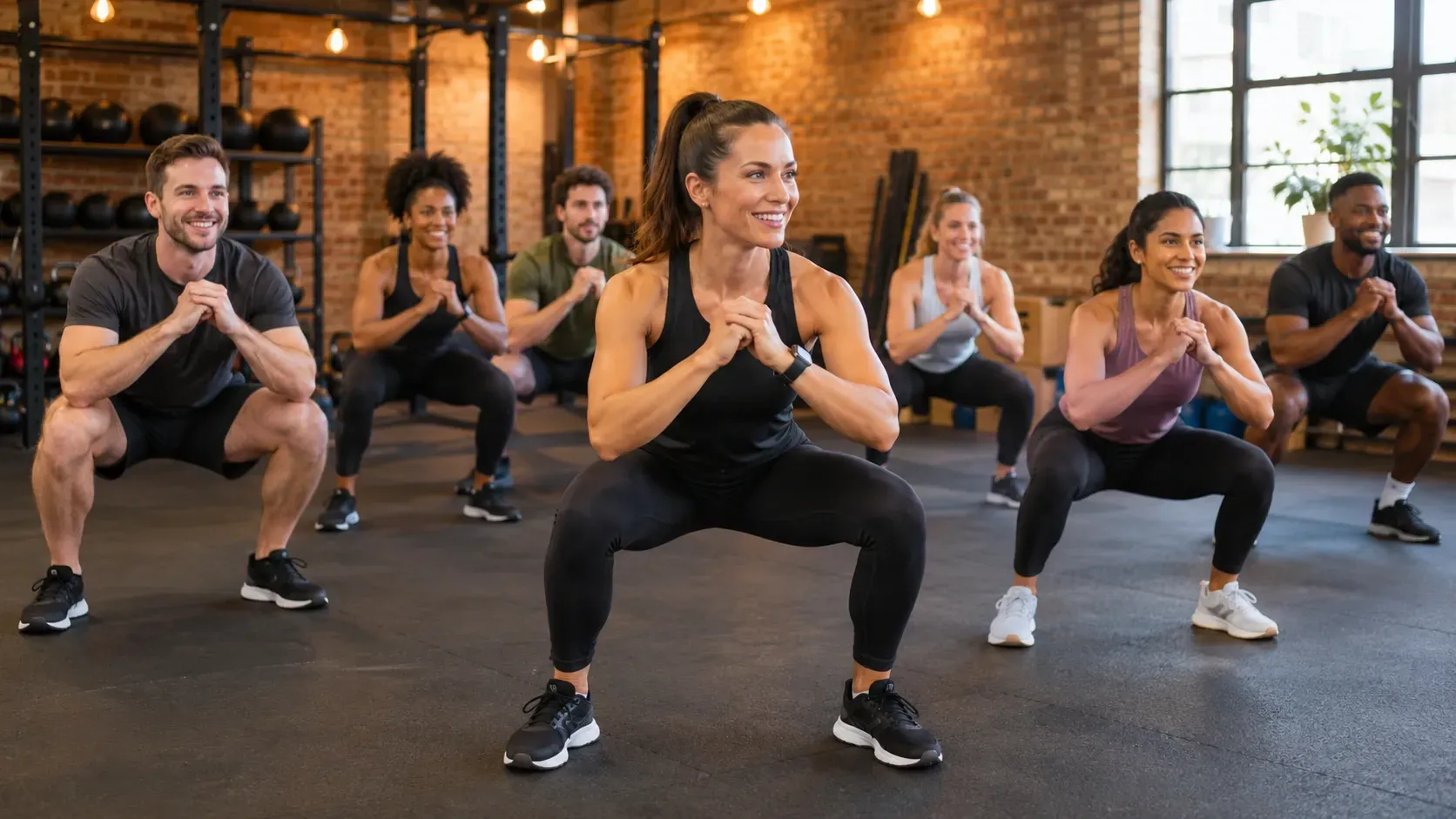
Whether you are a seasoned gym-goer or someone looking to kickstart a fitness journey, High-Intensity Interval Training (HIIT) has likely crossed your radar. It’s the "gold standard" of efficient exercise, designed to get you maximum results in minimum time. But what exactly happens when you swap the solo treadmill slog for a structured HIIT class? From metabolic shifts to the "afterburn" effect, here is how a HIIT class actually changes the game when you bring a bit of "humanzee" spirit to the floor. 1. It’s the Ultimate Time Hack Let’s be real: nobody wants to spend two hours on a treadmill staring at a wall. HIIT is for the person who wants to get in, smash it, and get out. By red-lining your heart rate for 30 minutes, you’re doing more for your metabolism than an hour of "jog-chatting" ever could. It’s efficiency at its finest. 2. The "Afterburn" is No Myth In the world of science, we call it EPOC (Excess Post-exercise Oxygen Consumption). In human terms? Your body is so shocked by what you just did that it keeps burning fuel for hours while you’re sitting on the sofa later. You’re literally turning your body into a furnace that doesn't switch off the moment you leave the studio. 3. High-Octane Calorie Shredding If you’re looking to shift some weight, HIIT is the heavy hitter. Because you’re alternating between "all-out" effort and "active recovery," your body burns through calories at an accelerated rate. It’s a high-intensity shock to the system that forces your fat stores to take notice. 4. Building "Functional" Muscle We aren’t talking about "show muscles" that look good but do nothing. HIIT builds the kind of lean, explosive muscle you actually use in real life—whether that's sprinting for a train or carrying all the grocery bags in one trip. You’re preserving muscle mass while torching the fat covering it. 5. Heart Health for the Long Run HIIT pushes your cardiovascular system to its limits, which sounds scary but is actually brilliant for your heart. It improves your VO₂ max (how well you use oxygen) faster than almost any other form of training. It’s like giving your heart a regular "software update." 6. No Equipment? No Problem One of the best things about HIIT classes is their versatility. While many studios use weights or rowers, the core of HIIT can be done using just your body weight. This makes the skills you learn in class highly transferable to home workouts or hotel rooms when you’re travelling. 7. No Boring Gear Required You don't need a basement full of expensive equipment to get a world-class workout. Most HIIT classes focus on bodyweight movements—squats, lunges, burpees, and planks. Once you learn the flow, you have a "portable" gym in your own head that you can take anywhere in the world. 8. A Natural Growth Hormone Kick High-intensity training triggers a massive spike in Human Growth Hormone (HGH) . This isn't just about muscle; HGH is the body's natural "fountain of youth" that helps with cell repair and fat loss. It’s basically a natural anti-ageing treatment delivered via sweat. 9. The Power of the Pack There is something deeply human about suffering together. When you’re in a class, the collective energy keeps you honest. It’s much harder to quit halfway through a set when the person next to you is digging deep. You feed off that atmosphere, pushing yourself further than you ever would solo. 10. Regulation of Blood Sugar Instead of just "going through the motions" on a bike for an hour, HIIT forces your body to get its act together. It attacks insulin resistance head-on, making it far more effective than old-school, steady-state cardio. If you’re serious about keeping your blood sugar in check or telling Type 2 diabetes to jog on, you need that raw, high-intensity grit—it’s the most efficient way to shock your metabolism back into peak performance. The Bottom Line: HIIT isn't about being perfect; it's about being intense. It’s about showing up, working hard, and tapping into that raw human potential. Your future self will definitely thank you for it.
By HIIT Gym April 13, 2026
Walking into a gym for the first time - or even the fiftieth - can feel overwhelming. The right gym membership isn't just a financial commitment. It's a promise you make to your future self. Let's be honest: most of us have signed up for a gym membership with the best of intentions, only to watch our attendance fade like a New Year's resolution by February. The problem usually isn't willpower. It's the misalignment between what the gym offers and what your actual life looks like. This guide helps you close that gap. Start with your "why" - not the price tag Before you even step foot inside a gym, get brutally honest with yourself about what you're trying to achieve. Weight loss, muscle gain, stress relief, athletic training, or simply building a lifelong movement habit - each of these calls for a different environment. A gym membership that's perfect for a powerlifter may be a terrible fit for someone who wants calm, guided yoga sessions. Strength training Look for free weights, squat racks, and a serious lifting culture. Mind-body balance Studios with yoga, pilates, or meditation classes are your sweet spot. Cardio & endurance Treadmills, bikes, pools — and ideally, group run clubs. General fitness A large, full-service gym with varied equipment suits you well. Location matters more than you think Research consistently shows that people are far more likely to use a gym that's close to their home or workplace. A fancy, fully-equipped facility 40 minutes away will lose to a modest one 10 minutes from your office every single time. When evaluating your next gym membership , treat location as a non-negotiable filter — not an afterthought. Pro tip: Do a trial commute to any gym you're seriously considering — at the time of day you'd normally work out. Traffic, parking, and walking distance feel very different at 6 a.m. versus noon. Decode the contract before you sign The fine print of a gym membership contract is where dreams go to die quietly. Always ask these questions before committing: Is this a month-to-month or annual contract? What are the cancellation terms? Are there initiation or enrolment fees on top of the monthly cost? Can I freeze my membership if I travel or get injured? Are classes, personal training, or guest passes included — or billed separately? Does pricing change after the first year? "The best gym is the one you'll actually go to. The best membership is the one that fits your real life — not your ideal life." Trial periods are your best friend Most gyms offer a free day pass or a short trial. Use it — and use it at peak hours. A gym that feels spacious on a Tuesday afternoon can feel claustrophobically crowded at 6 p.m. on a Wednesday. Your gym membership experience will be defined by those peak-hour visits far more than the quiet midday ones.i During your trial, pay attention to cleanliness, equipment availability, staff friendliness, and the general vibe. Do the other members look like people you'd feel comfortable around? Does the energy motivate you, or does it stress you out? These sensory details matter enormously for long-term adherence. Think community, not just equipment One underrated factor in choosing a gym membership is the human element. Group fitness classes , personal trainers, and even regular gym-goers you recognise can become powerful accountability mechanisms. A gym that fosters community tends to keep members longer and produces better results. Boutique studios often excel here — SoulCycle, CrossFit boxes, and local Pilates studios frequently build tight-knit communities. Larger commercial gyms offer anonymity, which some people prefer. Know which type of social environment fuels you. When to choose a specialised gym Sometimes, the right answer isn't a general gym membership at all. Rock climbers, martial artists, swimmers, and competitive athletes often benefit far more from sport-specific facilities. If you have a clear athletic passion, lean into it — you're more likely to train consistently in an environment built around something you love. Choosing a gym membership is ultimately an act of self-knowledge. The more clearly you understand your goals, your schedule, your social preferences, and your financial reality, the easier the decision becomes. Don't rush it. Take the trials, read the contracts, do the commute test — and then commit fully to the environment that gives your best self the best chance to show up.
More Posts