Fitness Classes West Hampstead — Finding the One That Actually Sticks

Hema Shah • May 19, 2026

Most people in West Hampstead have joined a gym at least once, gone consistently for about six weeks, and then gradually stopped. Not because they lost interest in getting fit. Because the class didn't hold them. They'd turn up, do the thing, leave — and feel no real pull to come back the following week. Sound familiar?


The problem usually isn't motivation. It's format. The right fitness class in the right environment changes the calculation entirely. And West Hampstead, for a relatively compact neighbourhood, has a genuinely interesting range of options if you know what you're actually choosing between.


What Fitness Classes in West Hampstead Actually Look Like in 2026

The main players in NW6 split broadly into two categories. You've got the larger multi-purpose gyms — Studio Society on Broadhurst Gardens and The Gym Group on Blackburn Road both offer timetables with yoga, spin, HIIT, boxing, pilates, and more. Big class lists, reasonably priced, plenty of variety. Fine if you already know what you want and you're disciplined enough to keep booking.


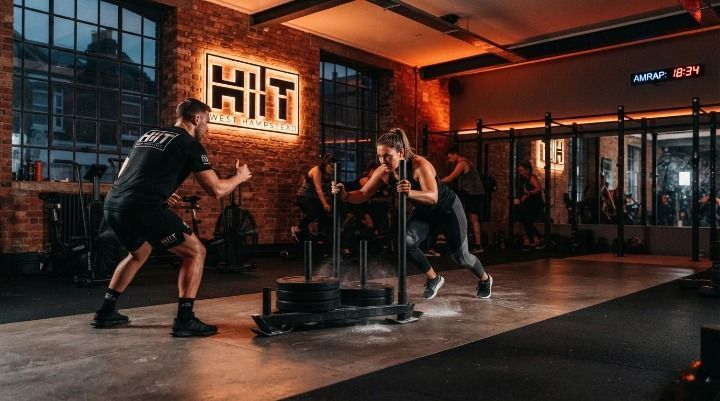
Then you've got the specialist studios. HIIT West Hampstead on Fortune Green Road sits in this second camp. Smaller, more focused, built around coached group training rather than a long timetable of different things. What you trade in variety you gain in accountability — because the coaches know who you are, which is a different dynamic than turning up to a class of thirty strangers and disappearing into the back row.


Which model works depends entirely on what's kept you consistent before. If you've been consistent somewhere, think about what that place did differently. If you haven't, the coached model is usually the better starting point.

Why HIIT Classes Near You Matter More Than You Think

HIIT — High Intensity Interval Training — is the format most fitness classes in West Hampstead are built around in some form, even if they don't label it that way. Short bursts of intense work, brief rest, repeat. The reason it's everywhere is because it works: your body burns more calories in less time and keeps burning them for hours after you stop, in a way that steady-state cardio simply doesn't produce.


At HIIT West Hampstead, the class itself runs for 45 minutes. That's the session length across the board — HIIT classes, Small Group Personal Training (SGPT), Hyrox Training, CrossFit. Forty-five minutes because that's genuinely enough time, and most people in NW6 have jobs, children, and a life that doesn't accommodate 90-minute sessions on a Tuesday evening.


The equipment matters too. Assault bikes, SkiErgs, kettlebells, TRX, sleds — the kind of functional kit that produces real metabolic conditioning rather than just movement. A spin bike will make you sweaty. A sled push will change your body composition. There's a difference, and it shows up after about eight weeks.

Hyrox Training in West Hampstead — What It Is and Why People Are Obsessed

If you haven't heard of Hyrox yet, you will. It's a competitive fitness format that combines 8km of running with eight functional workout stations — ski erg, sled push, burpee broad jumps, rowing, among others. It's become one of the fastest-growing training formats in London because it produces the kind of all-round fitness that most gym programmes miss: endurance and strength combined, rather than one at the expense of the other.


HIIT West Hampstead runs dedicated Hyrox Training sessions. It's one of the few gym classes in West Hampstead that offers proper Hyrox-specific programming rather than just labelling a circuit class with the name. If you've got a Hyrox event on the calendar or you're considering entering one, training in a class specifically designed for it makes a significant difference to how you perform on the day. For more on how Hyrox training fits alongside the other class types on offer, the timetable is at hiitgyms.com.

Personal Training West Hampstead — The Group Model That Works

One-to-one personal training is the gold standard for results. It's also £60 to £100 a session in this part of London, which adds up to a number that's hard to justify unless fitness is your primary expense.


Small Group Personal Training is the format worth knowing about. HIIT West Hampstead runs SGPT sessions with six to eight people per group. You get a coach who watches your form, adjusts your programme, and knows what you did last week — the elements of personal training that actually drive progress — without the one-to-one price. It's the most practical answer to the question most people in NW6 are quietly asking: how do I get the benefits of a personal trainer without spending £400 a week?

Gym Classes West Hampstead for New Mums — Something Often Overlooked

The postnatal fitness gap in NW6 is real. There are plenty of generic gym classes in West Hampstead, but very few that are specifically built for women returning to exercise after having a baby — and the distinction matters physically, not just logistically.

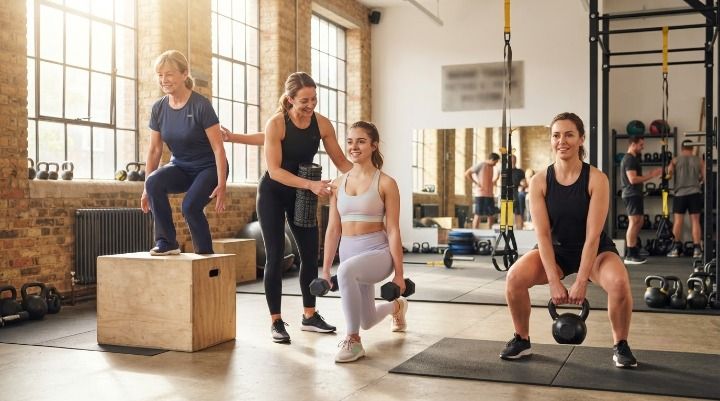
HIIT West Hampstead runs a mum-and-baby fitness class on Thursdays, led by postnatal specialist Steph. Babies come along. Sessions start with pelvic floor and core rehabilitation before building to full-body strength work. The class is one of the more quietly valuable things on the NW6 fitness map — both because it's physically appropriate for the postnatal body, and because a room full of new mums working through the same thing together is a social experience that regular gym classes simply can't replicate.

The Simplest Way to Figure Out Which Fitness Class in West Hampstead Is Right for You

Try something. Seriously — most good studios in the area offer a trial period. HIIT West Hampstead runs an intro trial that lets you experience the class format before committing to anything. Go once. See how the session feels, whether the coaches notice you, whether the people around you feel like a community or a collection of strangers who happened to be in the same room.

The right fitness class will give you a reason to come back next week that isn't purely willpower. That's the difference between a gym habit that lasts and one that dissolves by February.


For the full timetable, class types, and to book a trial at one of the best gym classes West Hampstead has to offer, head to hiitgyms.com.


Don't wait until you feel ready. That feeling doesn't usually arrive on its own.


Postnatal and baby fitness class
By Hema Shah May 13, 2026
Thinking about returning to exercise after having a baby? Here's what a postnatal and baby fitness class actually involves — and why it matters to get this right.
By HIIT Gym April 28, 2026
The first time I walked past a CrossFit gym —or a "box", as they call it—I heard grunting, weights crashing, and someone counting down reps like their life depended on it. I kept walking. Maybe you've had that same moment. You peeked through the window, thought, "That's absolutely not for me," and went home to your couch. No judgement. I did the same thing. But here's what I eventually figured out: CrossFit isn't the cult of sweaty maniacs it looks like from the outside. It's actually one of the most beginner-friendly fitness programmes out there…if you go in knowing what to expect. So let me break it down for you, honestly So... What Actually Is CrossFit? At its simplest, CrossFit is a workout programme built around three ideas: Functional movements — things your body is actually designed to do (squat, lift, push, pull, carry) High intensity — you work hard, but it's relative to your fitness level. Constant variety — every single day is a different workout It was founded in 2000 by Greg Glassman, a former gymnast who got frustrated that traditional gym routines—curls, leg press, and chest day—weren't making people actually fit. He wanted workouts that translated to real life. The first gym opened in Santa Cruz, California, and things kind of snowballed from there. There are now over 12,000 affiliated gyms across the world. The philosophy behind it? "Constantly varied functional movements performed at high intensity. "That's it. That's CrossFit in a sentence. The Weird Words You'll Hear at a CrossFit Gym Walking into your first class can feel like entering a foreign country. People are shouting acronyms at each other, and nobody explains anything. Here's your decoder ring: WOD — Workout of the Day. Every day there's a new workout posted on the whiteboard. Everyone does the same one but adjusted to their fitness level (more on that in a second). AMRAP — As Many Rounds as Possible. You get a set time, say 12 minutes, and you do a circuit of exercises over and over until the clock hits zero. Your score is how many rounds you finished. EMOM — Every Minute on the Minute. At the start of each minute, you do a task. If you finish in 40 seconds, you get 20 seconds of rest. If you're slow, you get less rest. It's self-regulating, which is clever. RFT — Rounds for Time. Instead of racing the clock, you race yourself. Complete a fixed amount of work as fast as you can. Scaling — This is the big one people miss. Every workout has a "prescribed" version and then modifications for people who aren't there yet. You might do ring rows instead of pull-ups or use lighter weights. This isn't cheating — it's the whole point. What Kind of Exercises Will You Actually Do? CrossFit pulls from three areas: Gymnastics (bodyweight stuff): pull-ups, push-ups, handstands, rope climbs Weightlifting : squats, deadlifts, cleans, snatches Cardio : running, rowing, jumping rope, assault bike Day to day, you'll see things like: Air Squats — the basic squat, done with just your body weight Burpees — everyone's least favourite exercise. Drop to the floor, push up, jump. Repeat until you question your choices. Kettlebell Swings — a hip-hinging movement that absolutely lights up your glutes Box Jumps — jumping onto a wooden platform to build explosive power Thrusters — a squat into an overhead press. Two exercises in one, because CrossFit is efficient like that Rowing — on a machine, not a lake (usually) A typical class runs for about an hour: 15 minutes of warm-up, some skill work where you practice a specific movement, the actual WOD (which is often shockingly short — 10 to 20 minutes), and then a cool-down. Why Do People Actually Stick with It? Here's the thing about CrossFit that nobody tells you upfront: the workout itself isn't the main reason people stay. It's the community. At a normal gym, everyone has headphones in and eye contact is basically illegal. CrossFit is the opposite. Your class of 10 or 15 people will cheer for you when you're on your last rep. They'll remember your name. Coaches track your progress. You start to feel accountable — not in a way that puts pressure on you, but in a "people are expecting me to show up" way that actually gets you out of bed on cold mornings. There's also the coaching element. Every class is led by a certified coach who watches your form and corrects you before you hurt yourself. That's something you don't get on a treadmill. And yes — the variety genuinely matters. When the workout changes every day, boredom basically becomes impossible. You don't dread going because you never quite know what's coming. Is It Actually Good for Losing Weight and Getting Stronger? Yes, but let's talk about why . CrossFit uses high-intensity interval training, which means your body keeps burning calories even after you've finished the workout. This "afterburn effect" is real and it's significant. You're not just burning calories during the 20-minute WOD — your metabolism stays elevated for hours afterward. For building strength, CrossFit leans heavily on compound movements: squats, deadlifts, presses. These recruit multiple muscle groups at once, which leads to faster overall strength gains compared to isolation machines. Combine that with eating enough protein and sleeping well, and your body composition will shift fairly quickly. That said, you can't outwork a bad diet. CrossFit won't fix things if you're eating poorly. It's a tool, not a magic wand. If you hate making your own workout plan and you like being around people, CrossFit will suit you better. If you prefer working alone at your own pace, a regular gym makes more sense. Neither is better — they serve different people. Your First Class: What's Actually Going to Happen Most gyms have an introductory program — usually called "Foundations" or "On-Ramp” where you spend a few sessions learning the basic movements before joining regular classes. Don't skip this. It's worth it. In a regular gym class , here's the flow: Warm-up (about 15 minutes) — dynamic movements to get your joints ready Skill work — the coach teaches or drills a specific movement pattern The WOD — the main event, usually 10–25 minutes of hard work Cool-down — stretching, breathing, high-fiving people You will be tired. You might feel a little dizzy the first time. That's normal. You won't die. How to Not Get Injured Injury prevention in CrossFit comes down to one philosophy: Mechanics, then Consistency, then Intensity. Get your movement right first. Then do it consistently with good form. Only then start adding weight or speed. In that order. Always. Practically, this means: Don't ego-lift. The person next to you lifting 100kg is irrelevant to your workout. Scale down. Do fewer reps, lighter weight, or an easier version of the movement until your form is solid. Tell your coach when something hurts. Sharp pain is not "just soreness." Say something. Soreness after your first few sessions is completely normal, by the way. Walking downstairs will feel like a personal attack. That fades within a week or two as your body adapts. What Do You Actually Need to Bring? Not much, honestly. Shoes : Get cross-training shoes — the Nike Metcon and Reebok Nano are the classics. Regular running shoes have too much cushioning and you'll feel unstable under a barbell. Clothes : Anything breathable and stretchy that lets you move freely. Water bottle : Non-negotiable. You'll sweat more than you think. That's genuinely it to start. You don't need gloves, belts, wrist wraps, or any of that stuff on day one. The Mistakes Almost Every Beginner Makes Skipping the warm-up. It feels like wasted time until you pull something. Then it feels very important. Refusing to scale. There is no prize for doing the "prescribed" version when you're not ready for it. The goal is stimulus, not suffering. Scale intelligently. Ignoring food. You're going to be hungrier than usual. Eat more protein. Prioritize sleep. Recovery is half the work. Comparing yourself to others. On week one, you will see people doing things that seem physically impossible. They've been doing this for years. Your only competition is last week's version of yourself. Who Is This Actually For? CrossFit markets itself as being "for everyone" and, honestly, it mostly holds up. The movements are infinitely scalable — a 60-year-old with a bad knee and a 25-year-old former athlete can do the same WOD with different weights and modifications. It's especially good if you: Get bored easily and need variety Do better with structure and coaching than figuring it out yourself Want to feel genuinely strong and capable, not just look a certain way Like the accountability of a group It's probably not for you if you strongly prefer working out alone, hate group settings, or have a very specific goal (like powerlifting or marathon running) that needs specialized programming. The Bottom Line CrossFit is loud, sweaty, occasionally chaotic, and genuinely effective. It's not a cult (mostly), it's not just for elite athletes, and the community aspect is the real secret sauce. The hardest part is, without question, walking through the door the first time. After that, the structure, the coaching, and the people around you carry a lot of the weight. Most gyms offer a free first session. If you've been on the fence, that's your move. Go once with no commitment. See how it feels. Worst case, you got a good workout and a story. Best case, you found something that actually sticks.
More Posts