Top 10 Fitness Classes in West Hampstead: Why HIIT West Hampstead Beats the Rest

Hema Shah • December 22, 2025

Selecting the correct fitness class in West Hampstead can be difficult because there are multiple facilities and a wide range of class types (Boxing, Circuit Training, Dance, etc.) available, especially now. All this considered, when searching for gyms close to or around West Hampstead, a quality atmosphere and proven results in our gym, along with the number of locations we have, open up opportunities for our community to develop through positive, supportive, and motivational relationships.


As a result, below we have put together a list of the 10 best Fitness Classes in West Hampstead available in the area - ultimately demonstrating how HIIT West Hampstead is superior to the others.


1. HIIT Workouts at HIIT West Hampstead

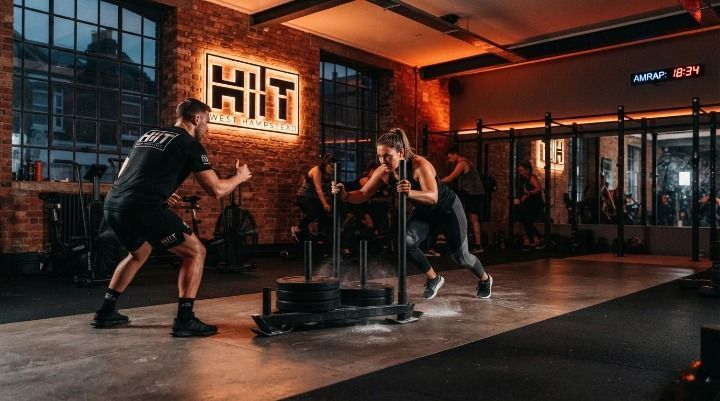
HIIT West Hampstead stands out when it comes to HIIT workouts in West Hampstead. The signature high-intensity classes incorporate strength, cardio, and athletic conditioning methods, along with expert workout programming, to get the most out of your workout by burning calories and building lean muscle. 


2. Group Exercise Classes at HIIT West Hampstead

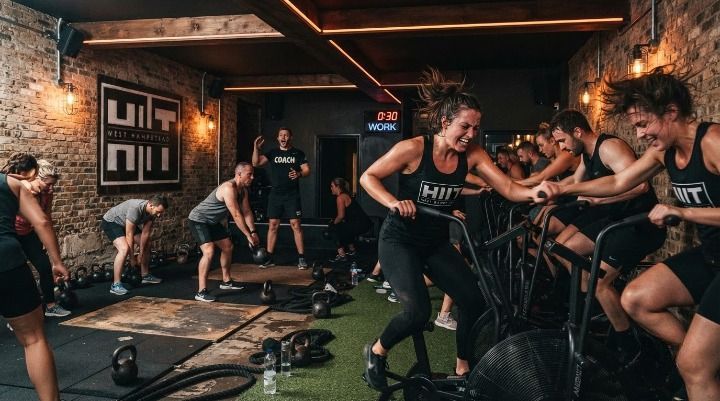
West Hampstead group exercise structured sessions are highly motivating for people who benefit from a teamwork-based training environment, with the HIIT West Hampstead model excelling at creating a community feel that helps members feel supported. 


3. Strength & Conditioning

In West Hampstead, Strength and Conditioning (S & C) classes are trendy, helping many people enhance their posture, build strength, and improve their functional fitness. Although a number of gyms are now including S & C classes, HIIT West Hampstead offers these classes as part of their regular schedule, allowing for a more balanced approach to developing all areas of fitness rather than just focusing on developing endurance with high-intensity cardiovascular training.


4. Boxing Fitness

Boxing has a place in the fitness sector as it helps to develop hand co-ordination, stamina and total body strength. Many gyms offer boxing training, but HIIT West Hampstead provides a unique atmosphere for boxing training with trainers who guide students in proper technique during energetic boxing workouts. 


5. Bootcamp Outdoor Training

A great way to break up the monotony of your regular workout routine is by participating in Bootcamp Sessions. Not only are these sessions typically held outside, but outdoor training sessions can provide you with physical and mental energy that you may not be able to achieve otherwise.

6. Yoga & Mobility Classes

Although HIIT West Hampstead focuses primarily on HIIT, their classes are augmented with a yoga-style mobility session once every two weeks on a rotating basis. These sessions enhance one's ability to recover from workouts, improve flexibility and increase your range of motion. As a result, you can reduce your risk of injury while maximising your performance.


7. Spin & Cycle Workouts

HIIT West Hampstead does not rely on spin classes to deliver a cycle experience; however, many HIIT West Hampstead circuits incorporate cardio segments to produce similar benefits in a shorter time frame, without requiring you to sit on a bicycle for 45 minutes.


8. Dance Fitness & Zumba

While dance fitness may be offered at your local studio, if your goal is to receive a rigorous, high-intensity cardio workout that delivers long-term results similar to those of a traditional HIIT workout, you may find yourself returning to HIIT West Hampstead for its structured format and high levels of intensity.


9. Pilates & Core Training

Core training is delivered through a mix of classes that include Pilates sessions focusing on core strength, functional movement, and alignment, along with blocks focused on core work in HIIT workouts. As a member of HIIT West Hampstead, you will develop a strong and functional core while completing a HIIT workout.


10. Personal Training Enhancement

Although personal training is not traditionally considered a “class,” it is an integral component of many fitness facilities’ offerings. HIIT West Hampstead has created a unique combination of group fitness classes often run by expert trainers with the opportunity for a member to receive one-on-one personal training. 


Why HIIT West Hampstead Beats the Rest

HIIT West Hampstead stands out from many other studios and gyms by offering members a combination of the greatest variety of classes and coaching along with support from other members creating a friendly, yet challenging, atmosphere.


If you’re looking for Fitness classes West Hampstead that are engaging, effective, and genuinely transformative, HIIT West Hampstead is the place to be. Whether your goal is fat loss, strength building, or simply enjoying exercise again, their expertly crafted HIIT sessions and group programmes will help you reach your potential.
Get Directions


Postnatal and baby fitness class
By Hema Shah May 13, 2026
Thinking about returning to exercise after having a baby? Here's what a postnatal and baby fitness class actually involves — and why it matters to get this right.
By HIIT Gym April 28, 2026
The first time I walked past a CrossFit gym —or a "box", as they call it—I heard grunting, weights crashing, and someone counting down reps like their life depended on it. I kept walking. Maybe you've had that same moment. You peeked through the window, thought, "That's absolutely not for me," and went home to your couch. No judgement. I did the same thing. But here's what I eventually figured out: CrossFit isn't the cult of sweaty maniacs it looks like from the outside. It's actually one of the most beginner-friendly fitness programmes out there…if you go in knowing what to expect. So let me break it down for you, honestly So... What Actually Is CrossFit? At its simplest, CrossFit is a workout programme built around three ideas: Functional movements — things your body is actually designed to do (squat, lift, push, pull, carry) High intensity — you work hard, but it's relative to your fitness level. Constant variety — every single day is a different workout It was founded in 2000 by Greg Glassman, a former gymnast who got frustrated that traditional gym routines—curls, leg press, and chest day—weren't making people actually fit. He wanted workouts that translated to real life. The first gym opened in Santa Cruz, California, and things kind of snowballed from there. There are now over 12,000 affiliated gyms across the world. The philosophy behind it? "Constantly varied functional movements performed at high intensity. "That's it. That's CrossFit in a sentence. The Weird Words You'll Hear at a CrossFit Gym Walking into your first class can feel like entering a foreign country. People are shouting acronyms at each other, and nobody explains anything. Here's your decoder ring: WOD — Workout of the Day. Every day there's a new workout posted on the whiteboard. Everyone does the same one but adjusted to their fitness level (more on that in a second). AMRAP — As Many Rounds as Possible. You get a set time, say 12 minutes, and you do a circuit of exercises over and over until the clock hits zero. Your score is how many rounds you finished. EMOM — Every Minute on the Minute. At the start of each minute, you do a task. If you finish in 40 seconds, you get 20 seconds of rest. If you're slow, you get less rest. It's self-regulating, which is clever. RFT — Rounds for Time. Instead of racing the clock, you race yourself. Complete a fixed amount of work as fast as you can. Scaling — This is the big one people miss. Every workout has a "prescribed" version and then modifications for people who aren't there yet. You might do ring rows instead of pull-ups or use lighter weights. This isn't cheating — it's the whole point. What Kind of Exercises Will You Actually Do? CrossFit pulls from three areas: Gymnastics (bodyweight stuff): pull-ups, push-ups, handstands, rope climbs Weightlifting : squats, deadlifts, cleans, snatches Cardio : running, rowing, jumping rope, assault bike Day to day, you'll see things like: Air Squats — the basic squat, done with just your body weight Burpees — everyone's least favourite exercise. Drop to the floor, push up, jump. Repeat until you question your choices. Kettlebell Swings — a hip-hinging movement that absolutely lights up your glutes Box Jumps — jumping onto a wooden platform to build explosive power Thrusters — a squat into an overhead press. Two exercises in one, because CrossFit is efficient like that Rowing — on a machine, not a lake (usually) A typical class runs for about an hour: 15 minutes of warm-up, some skill work where you practice a specific movement, the actual WOD (which is often shockingly short — 10 to 20 minutes), and then a cool-down. Why Do People Actually Stick with It? Here's the thing about CrossFit that nobody tells you upfront: the workout itself isn't the main reason people stay. It's the community. At a normal gym, everyone has headphones in and eye contact is basically illegal. CrossFit is the opposite. Your class of 10 or 15 people will cheer for you when you're on your last rep. They'll remember your name. Coaches track your progress. You start to feel accountable — not in a way that puts pressure on you, but in a "people are expecting me to show up" way that actually gets you out of bed on cold mornings. There's also the coaching element. Every class is led by a certified coach who watches your form and corrects you before you hurt yourself. That's something you don't get on a treadmill. And yes — the variety genuinely matters. When the workout changes every day, boredom basically becomes impossible. You don't dread going because you never quite know what's coming. Is It Actually Good for Losing Weight and Getting Stronger? Yes, but let's talk about why . CrossFit uses high-intensity interval training, which means your body keeps burning calories even after you've finished the workout. This "afterburn effect" is real and it's significant. You're not just burning calories during the 20-minute WOD — your metabolism stays elevated for hours afterward. For building strength, CrossFit leans heavily on compound movements: squats, deadlifts, presses. These recruit multiple muscle groups at once, which leads to faster overall strength gains compared to isolation machines. Combine that with eating enough protein and sleeping well, and your body composition will shift fairly quickly. That said, you can't outwork a bad diet. CrossFit won't fix things if you're eating poorly. It's a tool, not a magic wand. If you hate making your own workout plan and you like being around people, CrossFit will suit you better. If you prefer working alone at your own pace, a regular gym makes more sense. Neither is better — they serve different people. Your First Class: What's Actually Going to Happen Most gyms have an introductory program — usually called "Foundations" or "On-Ramp” where you spend a few sessions learning the basic movements before joining regular classes. Don't skip this. It's worth it. In a regular gym class , here's the flow: Warm-up (about 15 minutes) — dynamic movements to get your joints ready Skill work — the coach teaches or drills a specific movement pattern The WOD — the main event, usually 10–25 minutes of hard work Cool-down — stretching, breathing, high-fiving people You will be tired. You might feel a little dizzy the first time. That's normal. You won't die. How to Not Get Injured Injury prevention in CrossFit comes down to one philosophy: Mechanics, then Consistency, then Intensity. Get your movement right first. Then do it consistently with good form. Only then start adding weight or speed. In that order. Always. Practically, this means: Don't ego-lift. The person next to you lifting 100kg is irrelevant to your workout. Scale down. Do fewer reps, lighter weight, or an easier version of the movement until your form is solid. Tell your coach when something hurts. Sharp pain is not "just soreness." Say something. Soreness after your first few sessions is completely normal, by the way. Walking downstairs will feel like a personal attack. That fades within a week or two as your body adapts. What Do You Actually Need to Bring? Not much, honestly. Shoes : Get cross-training shoes — the Nike Metcon and Reebok Nano are the classics. Regular running shoes have too much cushioning and you'll feel unstable under a barbell. Clothes : Anything breathable and stretchy that lets you move freely. Water bottle : Non-negotiable. You'll sweat more than you think. That's genuinely it to start. You don't need gloves, belts, wrist wraps, or any of that stuff on day one. The Mistakes Almost Every Beginner Makes Skipping the warm-up. It feels like wasted time until you pull something. Then it feels very important. Refusing to scale. There is no prize for doing the "prescribed" version when you're not ready for it. The goal is stimulus, not suffering. Scale intelligently. Ignoring food. You're going to be hungrier than usual. Eat more protein. Prioritize sleep. Recovery is half the work. Comparing yourself to others. On week one, you will see people doing things that seem physically impossible. They've been doing this for years. Your only competition is last week's version of yourself. Who Is This Actually For? CrossFit markets itself as being "for everyone" and, honestly, it mostly holds up. The movements are infinitely scalable — a 60-year-old with a bad knee and a 25-year-old former athlete can do the same WOD with different weights and modifications. It's especially good if you: Get bored easily and need variety Do better with structure and coaching than figuring it out yourself Want to feel genuinely strong and capable, not just look a certain way Like the accountability of a group It's probably not for you if you strongly prefer working out alone, hate group settings, or have a very specific goal (like powerlifting or marathon running) that needs specialized programming. The Bottom Line CrossFit is loud, sweaty, occasionally chaotic, and genuinely effective. It's not a cult (mostly), it's not just for elite athletes, and the community aspect is the real secret sauce. The hardest part is, without question, walking through the door the first time. After that, the structure, the coaching, and the people around you carry a lot of the weight. Most gyms offer a free first session. If you've been on the fence, that's your move. Go once with no commitment. See how it feels. Worst case, you got a good workout and a story. Best case, you found something that actually sticks.
More Posts