Calories and Weight Loss – What You Need to Know
Calories and Weight Loss – What You Need to Know
Confusion about the calorie content of foods is common (and often exaggerated) because there is a large amount of conflicting information available to consumers regarding the effect of calories on weight loss.
Losing weight comes down to a few key concepts, even though there may be several ways to implement them in your training (e.g., using HIIT training to achieve weight loss). In this research, we will provide an outline of the main concepts related to weight loss and show you how HIIT is used to assist with the weight loss process through HIIT in West Hampstead.
How Calories Influence Weight Loss
The primary factor in losing weight is your energy balance (the relationship between the calories consumed (food) and the calories expended (exercise)). If you continue to burn more energy than you consume, then your body will utilise stored body fat as an energy source and therefore lose weight.
However, weight loss doesn't simply relate to how much food you eat or how much exercise you do. It relates to the kind of exercise you participate in, your overall metabolism, and how your body adapts to your exercise over time.
It is also important to consider that the amount of weight on your scale can change due to many things, including how hydrated you are, how much muscle you have gained, and what food you have eaten recently. Therefore, experts often recommend focusing on your body fat percentage and body composition rather than focusing only on what the scale says.
What Makes HIIT Effective for Burning Calories?
HIIT, or high-intensity interval training, offers an efficient way to utilise time and burn calories as a method for weight loss. HIIT, has you alternating periods of high-intensity activity with short periods of recovery rather than sustaining a consistent level throughout your workout programme. HIIT offers you two main benefits:
Increases Calorie Burn in Less Time
HIIT has been shown by research to have an approximate 25 - 30% increase in caloric expenditure for an identical length of time versus a traditional steady-state aerobic activity. HIIT provides greater demands upon the heart, thus increasing the amount of oxygen consumed and energy (i.e., calories) used by your body’s muscles, heart, etc.
Continues Caloric Burning After HIIT Workouts
HIIT’s unique component of continuing caloric expenditure after a HIIT workout is called EPOC, or excess post-exercise oxygen consumption. The body continues to expel excess oxygen from the exercise (and thus burns additional calories) for hours after the conclusion of the HIIT workout.
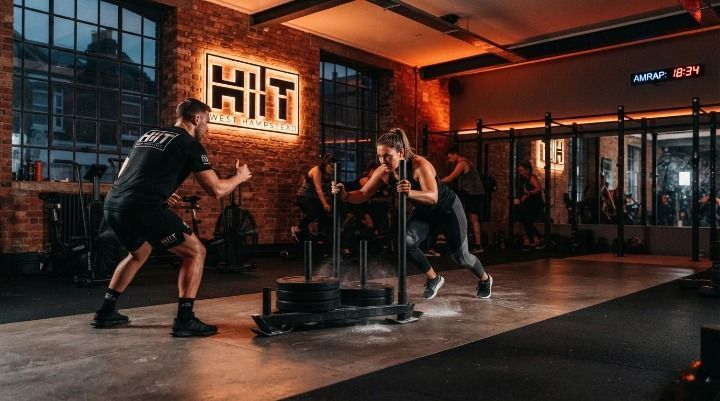
HIIT West Hampstead has clients burning up to 1000 calories in 45 minutes. Therefore, HIIT West Hampstead consciously maximises these metabolic effects while also improving client strength and overall fitness at the same time.
Calories Are Only Part of the Story
Burning calories is required for weight loss, but it's only one part of the equation. There are many components that affect how much fat your body can lose.
1) What You Eat Affects Your Weight Loss Success
When you eat whole foods, focus on lean protein, healthy fats and vegetables, and limit consumption of ultra-processed foods, it’s much easier to create a calorie deficit without feeling hungry. Therefore, when you have a proper nutrition plan, it is significantly easier to create a calorie deficit.
2) Muscle Is Important for Weight Loss
Muscle burns more calories than fat at rest. Therefore, by combining HIIT with strength training (like small group classes available at HIIT West Hampstead), you can increase your metabolism and body composition.
3) Consistent Exercise Will Help You Reach Your Goals
You cannot exercise your way out of an unhealthy diet. You will not see the same results if you only do intermittent "extreme" workout sessions regularly. The best long-term results come from a well-balanced approach of regular HIIT workouts, a balanced diet, and the proper amount of recovery.
Putting It All Together
The main factor to work on for weight loss is caloric intake, but that's not where it ends. Besides what you eat, your body processes that food differently than someone else's will. How you train will also affect how many calories you burn. The main reason why HIIT works for weight loss is because it allows you to burn the most calories in the least amount of time and allows for people with busy schedules. When you combine HIIT training with good eating habits and an environment that supports you, such as HIIT West Hampstead, you will achieve long-lasting changes.
If you live in the UK and want to change things around in your life, attend some of the HIIT classes that HIIT West Hampstead offers. The combination of eating smart and having the best coaches will allow you to achieve your weight loss goals faster than ever!